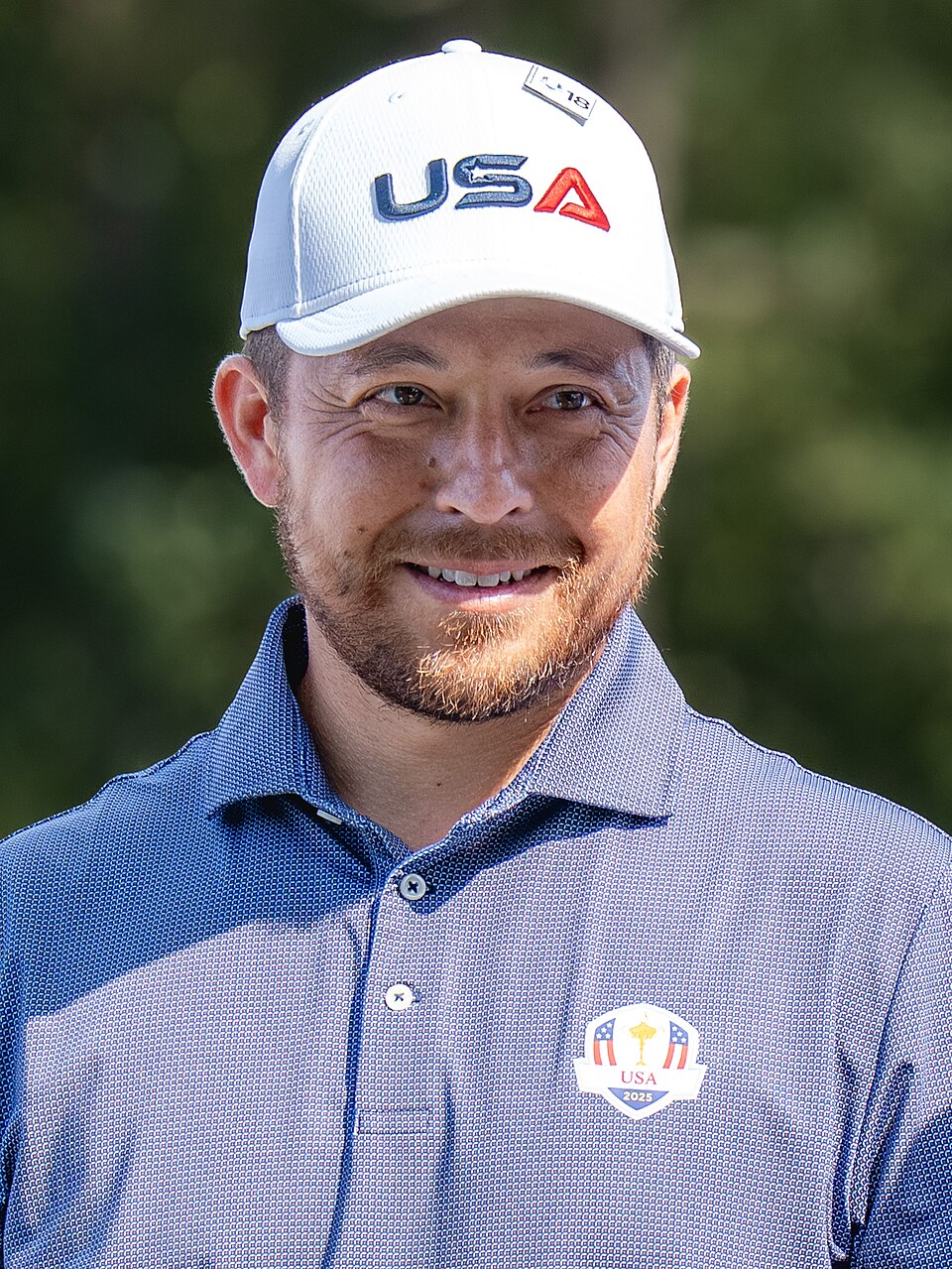
Xander Schauffele's Selfish Streak: The Key to His Golf Dominance?
In the high-stakes world of professional golf, where margins are razor-thin and mental fortitude is paramount, a peculiar trait has emerged as a potential secret weapon for one of the sport's brightest stars. Xander Schauffele, fresh off a truly dominant year that saw him claim two major championships, has openly admitted to possessing a "selfish streak." Far from being a flaw, Schauffele suggests this single-minded focus is not just a part of his personality, but a crucial ingredient in his recipe for success on the greens. Could this seemingly contradictory characteristic be the very engine driving his ascent to the pinnacle of golf?
Understanding the "Selfish" Mindset in Elite Sports
When Xander Schauffele speaks of being "selfish," it's vital to interpret this through the lens of elite athletic performance. This isn't about disregard for others or a lack of humility; rather, it refers to an unwavering commitment to his craft, an intense prioritization of his own preparation, development, and on-course execution. As Schauffele himself told reporters, "I'm pretty selfish... Selfish to yourself, I think the captains do a really good job." He acknowledges that while his wife, Maya, might not be "the hugest fan" of this trait in daily life, it's a necessary component for the extreme focus required to excel at the highest level of an individual sport.
For a golfer, a "selfish streak" translates into:
- Unwavering Focus: Blocking out distractions, external pressures, and even personal commitments to concentrate solely on the next shot, the next round, the next tournament.
- Relentless Self-Improvement: A singular drive to continually refine skills, analyze performance, and seek marginal gains, often requiring immense personal sacrifice.
- Mental Fortitude: The ability to compartmentalize setbacks, maintain composure under pressure, and remain internally motivated regardless of external circumstances.
- Boundary Setting: Protecting practice time, rest, and mental space from demands that might detract from performance goals.
This type of healthy self-focus is often misinterpreted, but for a professional athlete whose livelihood and legacy depend on peak performance, it can be the differentiating factor between good and truly great.
A Year of Unprecedented Dominance: Proof of Concept
The 2024 season stands as undeniable proof of the efficacy of Schauffele's focused approach. His dual major victories—the PGA Championship and The Open—were not just wins, but displays of absolute mental and physical mastery. At Valhalla for the PGA Championship, Schauffele carded four sub-70 rounds, culminating in a staggering 21-under-par total. This wasn't just a win; it was the lowest score to par in major championship history, a testament to sustained, relentless execution.
Just two months later, he replicated this brilliance at Royal Troon, triumphing at The 152nd Open. Entering the final day tied for second with five other formidable players, Schauffele separated himself with a magnificent final-round 65. This kind of Sunday performance, under immense pressure, is the hallmark of a player with supreme self-belief and an ability to zone out everything but the task at hand. Such moments of clutch play are directly linked to the kind of intense, almost "selfish," focus he describes.
These major victories join a distinguished list of achievements, including his Olympic gold medal at the Tokyo 2020 Games—a poignant win for him and his father, Stefan, whose own Olympic dreams were thwarted by a car crash. Schauffele's career is dotted with consistent high finishes, including multiple runner-up spots at majors (2018 Open, 2019 Masters, 2019 US Open, 2021 Masters), and ten PGA Tour titles, including a World Golf Championships-HSBC Champions title in 2018. He even equaled the record for the lowest round in major history with a first-round 62 at the 2023 US Open. These are not merely statistics; they are markers of a career built on meticulous preparation and an unyielding commitment to excellence. For more on his journey, read From Top 350 to World No. 2: Xander Schauffele's Rise to Golf Elite.
Navigating the Individual vs. Team Dynamic: The Presidents Cup Context
While Schauffele's "selfish streak" clearly serves him well in individual events, the conversation around it often intensifies during team competitions like the Presidents Cup. Golf, typically a solitary pursuit, demands a different approach when representing a team. Schauffele recognizes this shift, acknowledging the extra demands of timed dinners, photos, and galas that are part of team week, contrasting them with the personal routines of an individual tournament.
However, even in a team setting, his core philosophy holds. He emphasizes that "all of us need to do what we normally do," suggesting that maintaining individual peak performance is still the best contribution one can make to the collective. The role of captains and backroom staff, in his view, is to facilitate this by creating an environment where players can still prioritize their individual needs within the team structure. This pragmatic outlook allows him to switch modes, contributing to the team while never fully abandoning the self-focused discipline that defines his individual success.
As he geared up for the Presidents Cup, paired with Tony Finau, Schauffele's willingness to adapt while retaining his core identity showcased a mature understanding of both personal excellence and team collaboration. The US team, boasting talents like Scottie Scheffler, Collin Morikawa, and Wyndham Clark, indeed benefits from players who can bring their individual strengths to the fore, even if it stems from a deeply personal, "selfish" dedication.
Tips for Cultivating a "Healthy Selfishness" in Your Own Pursuits
While most of us aren't competing for major championships, the principle of Xander Schauffele's focused dedication can be applied to any pursuit of excellence:
- Define Your Priorities: Clearly identify what truly matters for your goals. What activities or efforts yield the greatest results?
- Set Boundaries: Learn to say no to distractions or demands that don't align with your core objectives. Protect your time for deep work, practice, or personal development.
- Embrace Focused Practice: Whether it's a skill at work, a hobby, or a personal project, dedicate undistracted time to deliberate practice and improvement. Eliminate multitasking.
- Prioritize Self-Care: "Selfishness" can also mean ensuring you get adequate rest, nutrition, and mental breaks to maintain peak performance and avoid burnout. This isn't indulgence; it's maintenance.
- Compartmentalize: Learn to mentally separate different aspects of your life. When it's time for work, focus on work. When it's time for family, be fully present.
Conclusion
Xander Schauffele's "selfish streak" is far from a character flaw; it's a strategic pillar of his golf dominance. In an individual sport demanding unparalleled precision, mental toughness, and continuous self-improvement, his unapologetic focus on himself and his craft has propelled him to the sport's highest echelons. From his record-setting major victories to his consistent presence at the top of the world rankings, Schauffele exemplifies how a concentrated, dedicated mindset—often labeled "selfish" outside of a competitive context—is not merely beneficial but essential for achieving and sustaining elite performance. As he continues to dominate, it's clear that this unique quality is not just a part of who he is, but fundamentally why he wins.